

Aspen Acres Fire
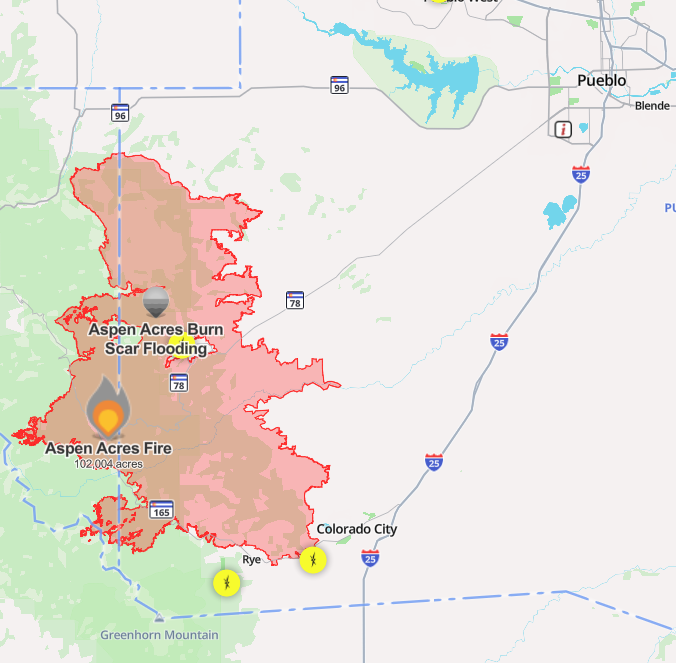
Has your home or property been damaged by the Aspen Acres Fire?
McFarland Litigation Partners is now representing homeowners, families and businesses affected by the fire in Pueblo and Custer counties. We are a Colorado-based leader in wildfire litigation, and we have been a critical part of some of the largest wildfire recoveries in this state.
If you suffered property damage or loss from the Aspen Acres Fire or the flooding that followed, you may have claims beyond what your insurance will cover.
Speak Directly with Attorney Luke McFarland
No cost or obligation consultation. Luke will do his best to answer directly, and will return all calls same-day where possible.
Speak with Attorney Luke McFarland to Learn More
Upcoming Town Hall Meetings
We hold town hall meetings for Aspen Acres Fire victims to meet Luke in person, hear where the investigation stands, and ask questions about the legal and insurance landscape. Dates, times and locations will be posted here as they are scheduled.
To be notified about the next meeting, email luke@mcfarland.law or call 303.279.8300, x.1.
Speak to Luke Privately
Email Luke with any questions, or to schedule a call or meeting. Luke will do his best to answer directly, and will return all calls same-day where possible.
No cost or obligation for consultations.
Our Wildfire Experience
Colorado-Based Leader
McFarland Litigation Partners is one of the few local Colorado firms that has handled complex wildfire lawsuits for decades.
Twenty Years, $100 Million+
McFarland Litigation Partners has represented victims of wildfires for over twenty years and has helped recover over $100 million for its clients.
$640 Million Settlement
Luke McFarland was lead trial counsel for the largest group of plaintiffs in the Marshall Fire litigation against Xcel Energy in Boulder County, and helped secure the largest wildfire settlement in Colorado history, $640 million, the day before an 8-week jury trial was set to begin against the utility.
Cause of the Fire
Our ongoing investigation reveals that equipment owned and operated by the San Isabel Electric Association at the fire ignition area south of the Aspen Acres Campground may be responsible for this catastrophic fire.
Fire officials have not publicly reported any findings as to the cause, but have confirmed the fire is considered “human caused.”
Frequently Asked Questions
I have insurance. Is there any reason to look at a lawsuit?
Yes. There are various categories of damages that are either not covered at all by your insurance, or for which you almost certainly do not have enough insurance, including:
- Full costs to rebuild your home (many policies will not cover the full cost to rebuild)
- Full costs to rebuild barns, sheds, garages and other accessory structures (many of these are not covered at all, or have very low coverage limits)
- Cost and diminished value due to destruction of mature trees, landscaping, views and privacy (often not covered)
- Ensuing damage caused by flooding and mudslides
- Emotional distress
- Temporary living expenses during the rebuild process
- Loss of income and business disruption
- Personal property above contents limits
For clients who have insurance, we push to recover from whoever caused the fire their true losses above and beyond what insurance pays for.
For those without insurance, a lawsuit is typically the only way to recover for the loss of their property.
I only suffered flood damage. Can I pursue a claim?
Yes. Wildfires often cause extensive flooding. This is because wildfires change how the ground absorbs and moves water. Vegetation that might slow water flow to allow absorption is gone, and the heat from the fire can make the top layers of soil “hydrophobic” and unable to absorb water. Loose material, ash, and sediment from the fire can be swept downstream and block drainage channels.
We have seen all of these happen following the Aspen Acres Fire. If someone is responsible for causing a wildfire, they are typically responsible for the abnormal flooding that often follows. McFarland Litigation Partners has successfully recovered damages for flooding following wildfires.
I had a business that was impacted by the fire. Do you represent businesses?
Yes. We pursue the same types of claims for businesses as we do for individuals, although there are often important differences. If your business was damaged by the Aspen Acres Fire, not only may you have property damage, you may have significant business interruption and lost revenues.
Some of these may be covered by insurance, others are likely not. We are happy to discuss your individual situation and to see if you would benefit from representation, at no cost and with no obligation.
Can I talk to someone for more information?
Yes. Lead attorney Luke McFarland is available to discuss your specific situation. You can come to one of our Town Hall meetings to meet in person, or email luke@mcfarland.law or call 303.279.8300, x.1.
No obligation consultation. We will answer any questions you may have about the legal or insurance landscapes.
How does McFarland Litigation Partners charge for its services?
We will work for you on a contingency (percentage) basis, and front all of the costs of litigation for you. This means you pay us nothing unless we obtain a recovery for you.
Are utilities who provide electric service liable when their equipment starts a fire?
Colorado law requires that utilities transmitting electricity in the state “exercise the highest possible degree of skill, care, caution, diligence, and foresight with regard to that activity, according to the best technical, mechanical and scientific knowledge and methods which are practical and available at the time.”
This is because the transmission of electricity, while incredibly useful, is also incredibly dangerous. As such, the law requires those selling that electricity to exercise the utmost care. Failure to do so is negligence by the utility, and utilities are held liable if their negligence causes harm.
I am a member of the San Isabel Electric Co-Op. Won’t pursuing a claim risk bankrupting the utility or driving up electricity rates?
Many people I have spoken with who were impacted by the Aspen Acres Fire have concerns about pursuing legal action against SIEA because it is a co-op owned by its customers, and they are concerned about either bankrupting the entity or driving up utility costs. This is an admirable concern from the community, but you should still speak with a lawyer.
Importantly, utilities usually have insurance to cover just this scenario: to compensate people if their equipment causes a wildfire. While those insurance costs are rising nationwide as wildfire risk increases, getting a recovery from a utility’s wildfire insurance after a fire typically does not increase rates. If you don’t pursue a monetary recovery to which you are entitled, that insurance money likely just goes to others. The companies that provide homeowners insurance like State Farm and Allstate will almost certainly pursue the utility to recover amounts they have paid out (something called “subrogation”), so if you stand by, it likely does not help the utility and just means insurance companies get more money while the real victims get less.
These are complicated issues and we are happy to discuss them further with you.
Speak Directly with Attorney Luke McFarland
No cost or obligation consultation. Luke will do his best to answer directly, and will return all calls same-day where possible.